
Building More than Oases
Or why we need Christian educational institutions

I have written previously about the need for Christian children to receive a thoroughly Christian education; an education that treats the Lordship of Jesus Christ as the most supremely relevant fact for every area of life and knowledge.
After all, what other integration point can there be for all of the varied facets of wisdom and understanding than the one for whom all was made, in who all things hold together, and by whom and for whom we have been saved. What other paideia could there be for Christian children, than a Christian one?
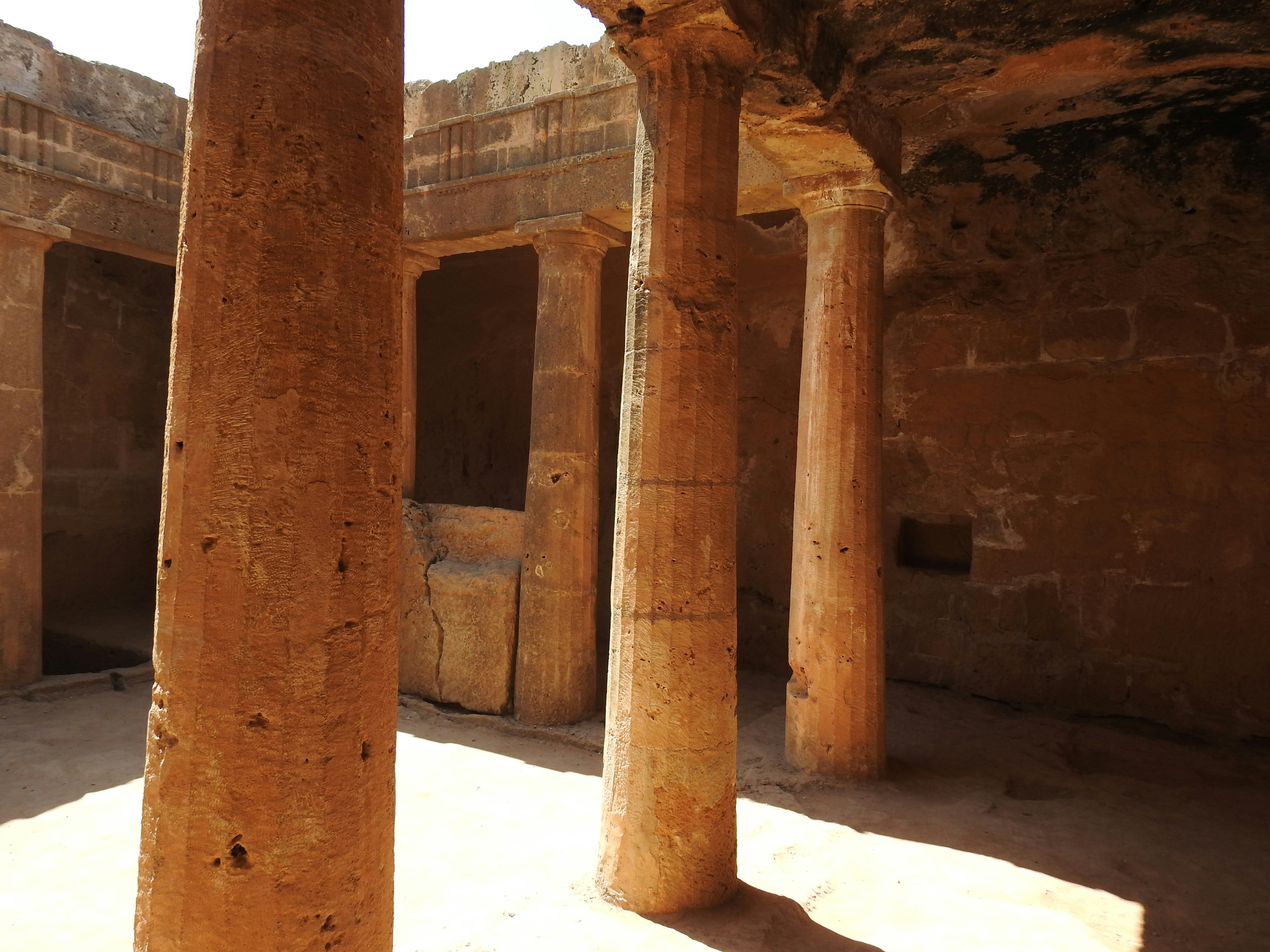
Nevertheless, looking around the Christian education landscape of the UK today can feel like looking at a wilderness place; the haunt of jackals and wild ghosts as the wind whips through the ruins of things that were but are no more.
There are institutions all around us that, once upon a time, were dedicated to a thoroughly Christian education. Church schools, universities, private schools, many of which still wear their historic mottos with an awkward embarrassment.
There was once a time, for example, when the University of Aberdeen wanted every incoming student to know that “The fear of the Lord is the beginning of wisdom”, and a time when Glasgow University wanted their outgoing students to enter the world remembering that all their knowledge was in service of the one who is the “via, veritas, vita”. But the reality has long since left the mottos hollow.
Now, this is not to say that there aren’t oases in this barren landscape. There are shady, sheltered spots where green things are growing again, away from the desiccating winds of state education. A generation of faithful, homeschooling weirdos are now starting to see the fruit that comes when children have their whole lives planted by streams of living water.
But the question remains, how do we who want to see a revival of Christian education go from ephemeral fruit to a harvest without measure? How do we start to build so that our children receive more than a conviction and just enough of a memory to start again from scratch? How do we give them the foundations of a culture of Christian education, something that they can build upon generation to generation, until the memory of these arid times has been swallowed up in blessing?
I want to suggest that, for this to happen, we need to start building Christian educational institutions again; that we need something more than disparate, individual, homeschooling families.
And in the rest of this post, I want to make a few briefs arguments as to why.
But first a caveat. I want to affirm, and reaffirm, and affirm it once more that fundamentally, authority and responsibility for the education of children lies with parents. Where other educational institutions exist, they exist to help the families of the people of God live out those covenantal responsibilities.
Building larger educational institutions inherently requires parents to navigate how negotiable various preferences are. There will be things they would ideally want that they can’t have if they want to be part of a joint endeavour. This will always make homeschooling an attractive option to some Christian parents.
A healthy culture of Christian education should have no desire to squash that. In fact, my hope is that a healthy culture of Christian education, with its variegated patina of educational institutions, would provide an environment that allows Christian homeschooling to flourish in a way that it can’t now.
With that said here are three reasons we need to build Christian institutions.
1. Institutional memory is longer than familial memory
I don’t think I am going out on a limb to say that one of the most pervasive feelings amongst the new generation of Christian home schoolers in the UK could be summed up as:
“I don’t really know what I’m doing”
To be sure, there are some things we do know; we know that Christian children need a Christian education and that a faithful mother at home focussing her attention on three/four/five/six children for sixteen to twenty years will likely produce significantly admirable educational results. We are all convinced of that.
But there are still so many things that we don’t know. The strengths and weaknesses of various curricula for example, or how to teach our children according to a model of education that we know is so much better than the model we ourselves received.
Each home-schooling family does their best to learn what they can, from wherever they can, and at the end of twenty years many are experts!
…Just in time for their home schooling career to come to an end.
That’s not to say that the expertise is useless, or completely wasted, or bound to disappear entirely. Not at all, those home-schooled children will surely produce grandchildren and many lessons will be passed on.
Nevertheless, that doesn’t always happen. And even when it does, the cross-pollination of expertise from one family to another is limited.
Familial memory is not that long, not really. Though the lessons your great grandparents taught your grandparents surely live on in some unrecognisable way in your own life today, the capital of that memory has largely faded. The children grow up and leave, and over time the expertise of the culture (as a whole) starts to spill into the soil and drain away.
It’s not the same with educational institutions; a cohort passes through and yet the teachers remain. And though teachers grow old and retire, the constant overlap between the fresh and the experienced teachers provides a continuity of expertise that over time can build, accumulating as an inheritance for later generations.
Think of a library. One man’s personal library may be sold on the cheap, within a month of his death. A sizeable portion of my own theological library has come to me that way. But a good institutional library can protect a collection long after the death of everyone involved. And it ought to be the same with educational institutions.
If we want to see a multi-generational culture of Christian education take root in the UK again, if we want foundations that can be built upon generation by generation, we’re going to need to start gathering our expertise in structures that will last beyond one family’s homeschooling years.
2. Doing stuff together is better than doing stuff apart
This second point is even simpler than the first. It is better to do things together, than to do them apart.
Of course there are exceptions to this; just because it is better to do things together does not mean that it is better to do things together with just anybody. There are a whole host of dynamics that go into working together fruitfully and righteously with other people.
Nevertheless, given the premise of a faithful covenant community of God’s people, living and worshipping in the same place, it is better for them to help each other with stuff than to try and do it by themselves.
After all, we all have blind spots and so there are always ways that any faithful Christian family can minister to the others around them. There are parts of a rounded education that come naturally to me, but that others have disdained to care about. There are parts of becoming a full, rounded, adult that I should probably pay more attention to.
Labouring alongside other families can help deal with these blind spots in the same way that reading old books can.
I’m not advocating for some sort of top-down, bland uniformity in the way we educate; simply highlighting the fact that the best way to do this well is for some of us to do it well together.
Formal institutions organically flow out of that desire.
3. Blessing to the vulnerable and half-convinced
The final reason I want to touch on here (though by no means the final reason in existence) is that we want a culture of Christian education to bless the coming generations in the UK.
We want that blessing to sweep up the vulnerable, and the (as of yet) half-convinced as well.
I am a firm believer in the idea that most families only think they can’t homeschool. There are many that should try it, find out that it’s really difficult but worth it, and end up giving their Christian children a far better education than the one that they would currently get in the state schools.
Most of the time the perceived barriers (of finance or otherwise) are only perceived barriers and could be overcome with less difficulty than supposed. More Christian families should be willing to sacrifice for the sake of the education of their children. But the reality is, that they aren’t. Or aren’t yet.
These families are the half-convinced. They are those who sort-of agree, but are tentative, nervous, about the practicalities.
We want them and their children and grandchildren to be swept up in the blessing of a Christian education anyway. We may wish that these families were zealous for this like we are, ready to sacrifice like we are, ready to lead the charge like we are. But they aren’t.
The availability of solid, Christian schools, would be a blessing to them.
And of course, there are vulnerable people who really can’t find a way to homeschool, no matter how convinced they might be. The clearest examples would be the widows, who need to feed their children and educate their children, but the constraints of their situation make it genuinely impossible to do both without help.
A culture of Christian educational institutions therefore becomes a tool in the hands of God’s people to fulfil their duty towards the widow and the orphan.
Conclusion
The landscape of Christian education in the UK is a barren one; an arid wilderness swept by the desiccating winds of state education. We ought to be thankful to the Lord for the fruit of faithful homeschooling parents, those who have laboured as tireless ‘weirdos’ in their sheltered corners.
But in the long-term, a truly vibrant, multi-faceted, culture of Christian education in the UK requires us to start building robustly Christian educational institutions as well.
Of course, a thousand pitfalls and temptations come along with institutions. Their mere presence does not guarantee anything. And the practical, legislative, logistical barriers are all too easy to see.
Nevertheless, the Lord has done this many times over in the past and it’s a good time to ask him to do it again.
Photo by Stjepan Gadze on Unsplash
Amen. Let’s build.
Amen, LET’S GO!